

Roofing
A straight answer about your roof.
We look at the whole roof, show you what we find, and tell you whether it needs a repair, a replacement, or nothing yet.
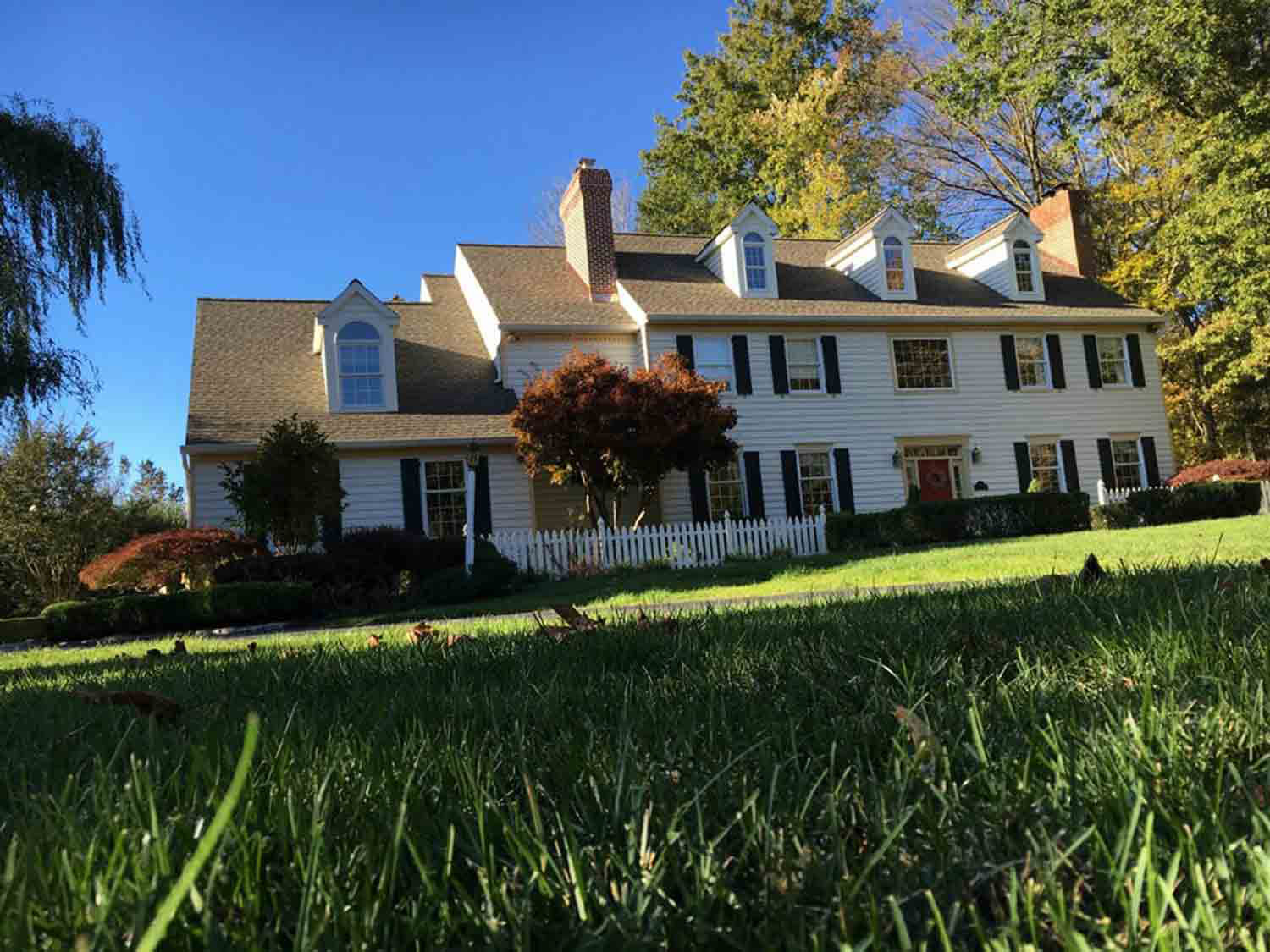
The first question
Repair or replace?
A leak does not always mean a new roof, and a roof that looks fine from the driveway is not always sound. Two things decide it: how old the roof is, and how far the damage goes.
Repair.
Usually the right call when:
- The roof is in the first half of its expected life.
- The trouble is in one spot: a few lifted shingles, one leak, or flashing at a chimney or vent.
- The decking underneath is still solid.
- The rest of the shingles still hold their granules.
Replace.
Usually the better investment when:
- Wear shows up across several sections, not just one.
- Shingles are curling, cracking, or shedding granules across the whole roof.
- The decking is soft or water-stained, or the roofline sags.
- You are on your second or third repair in a few years.
Storm damage changes the math, because wind and hail can bruise a roof that still looks intact. Start on the Storm Restoration page
A replacement, step by step
What happens between the old roof and the new one.
Most homes take a day or two. Larger or steeper roofs, deck repairs, and rain add time, and we tell you when they do.
-
Protect the property
Tarps go over the landscaping, the debris trailer parks at the roof edge, and your cars move out of the driveway before the first shingle comes off.
-
Tear off to the deck
Old shingles, underlayment, and flashing come off down to the wood. This is the loud part of the day.
-
Inspect and repair the deck
With the roof stripped, soft or rotted sheathing shows itself. It gets replaced before anything new goes on, and you hear about it before we do it.
-
Ice and water barrier, then underlayment
A self-sealing membrane goes on at the eaves, in the valleys, and around penetrations, where ice and wind-driven rain push hardest. Underlayment covers the rest of the deck.
-
Flashing and drip edge
New metal at the chimney, walls, pipes, and vents, and along the roof edge. Most leaks start at these seams, so they are not reused from the old roof.
-
Shingles, ventilation, and ridge
Starter course, then shingles from the eave up, then the ridge vent and cap. Intake and exhaust ventilation are set so the attic can breathe.
-
Cleanup and walkthrough
Magnets sweep the yard and driveway for nails, the debris is hauled away, and we walk the property with you before we call it done.
The inspection
What we check on a roof.
- Shingles
- Curling, cracking, missing tabs, and bare patches where the granules are gone.
- Flashing
- The metal at chimneys, walls, pipes, and vents. Most leaks start here, not in the field of the roof.
- Gutters
- Granules collecting in the gutters mean the shingles are wearing, even when they look fine from the yard.
- Decking
- Soft spots underfoot and any dip or sag along the ridge and eaves.
- Attic
- Daylight through the boards, stains on the rafters, and damp insulation.
- Ventilation
- Intake at the eaves and exhaust at the ridge. Ice dams in winter usually trace back to attic insulation and airflow, not the shingles.
You get photos of what we found and a plain recommendation: repair, replace, or leave it alone for now.
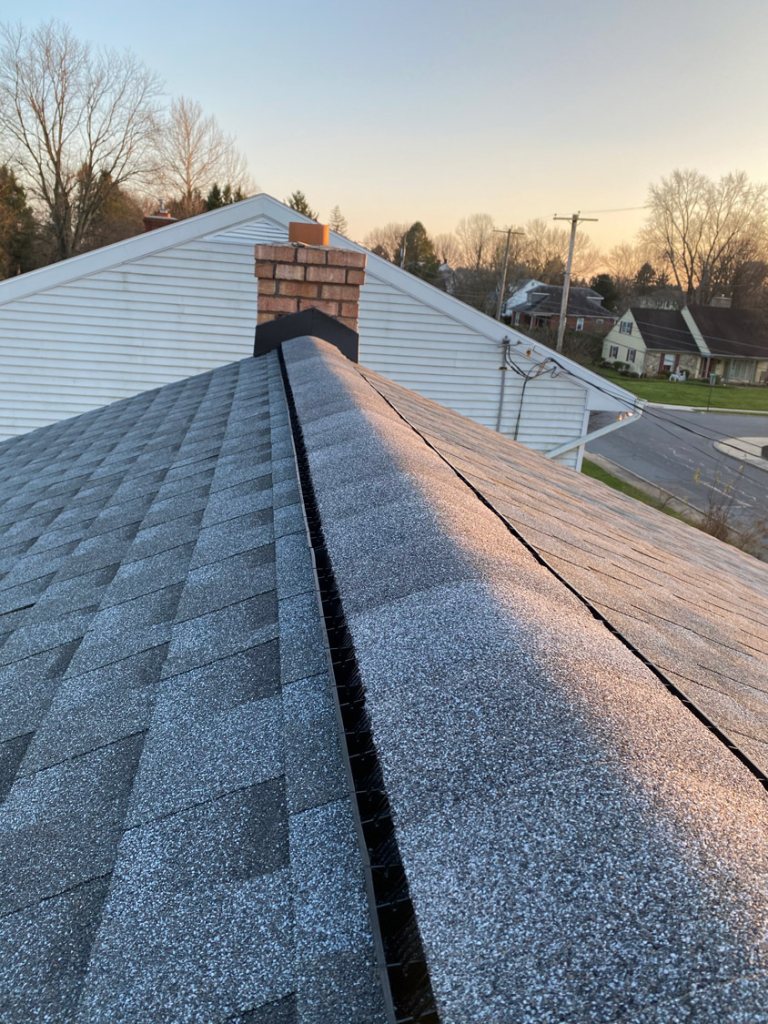
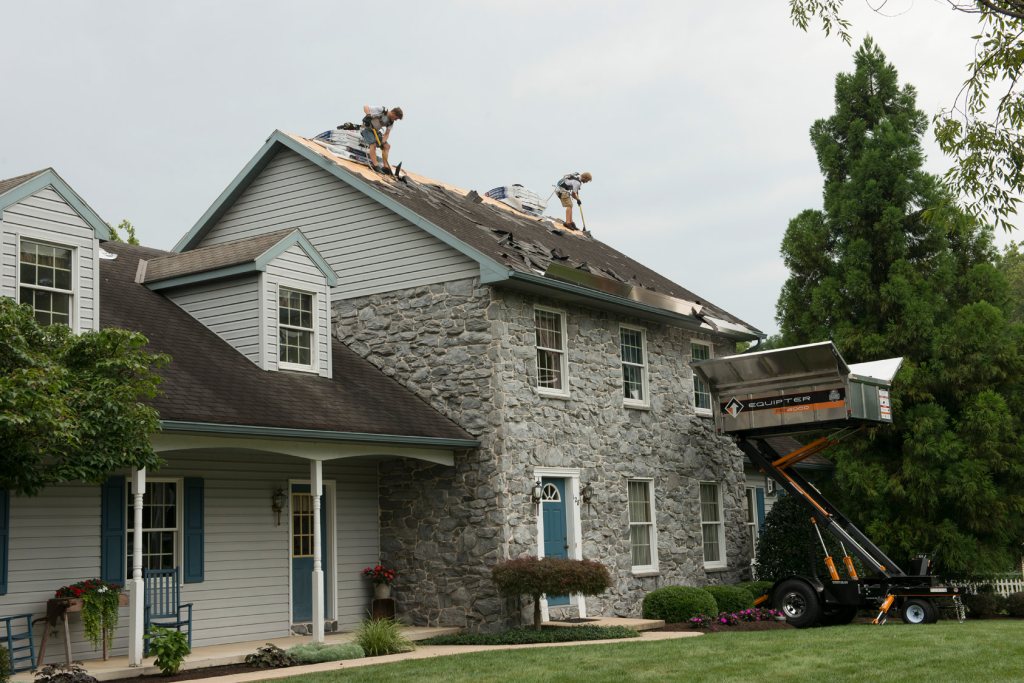
Finished work
Roofs we have put on, and what goes on underneath.
Two finished roofs in southeastern Pennsylvania, and the debris trailer at the roof edge on tear-off day.
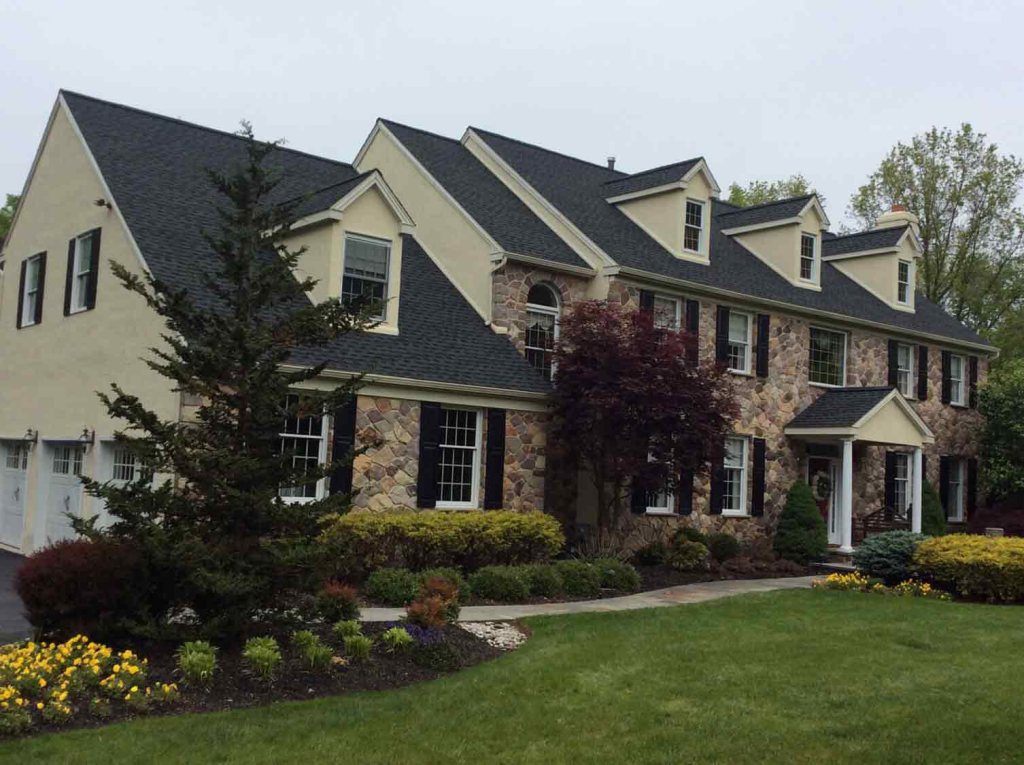
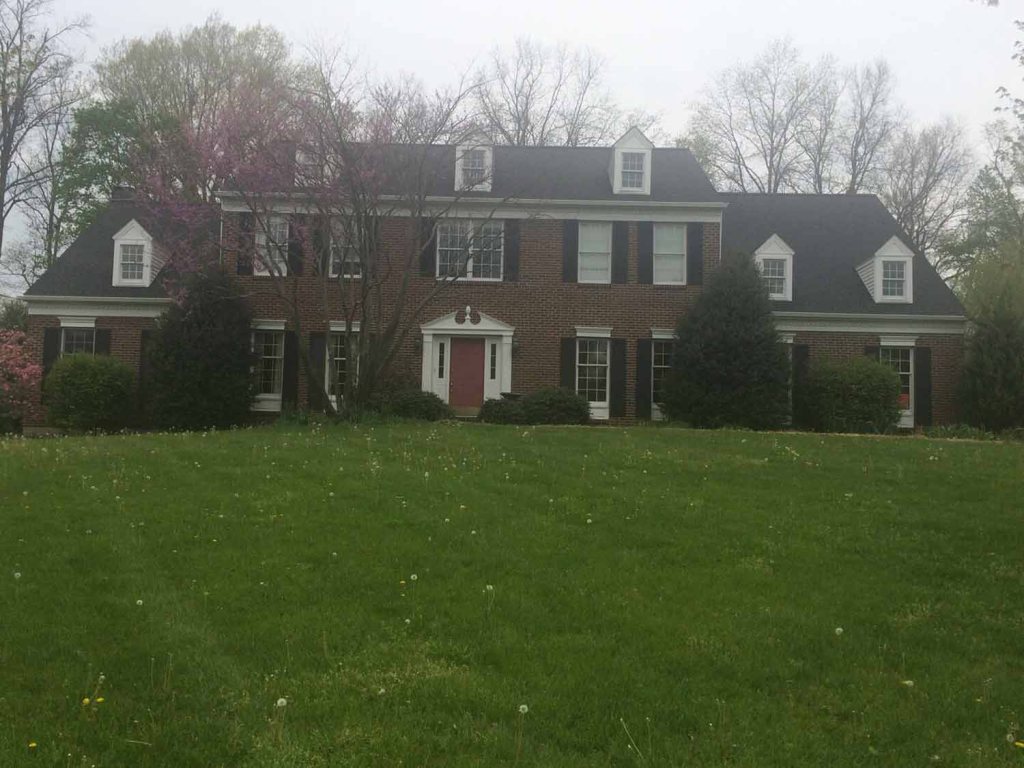
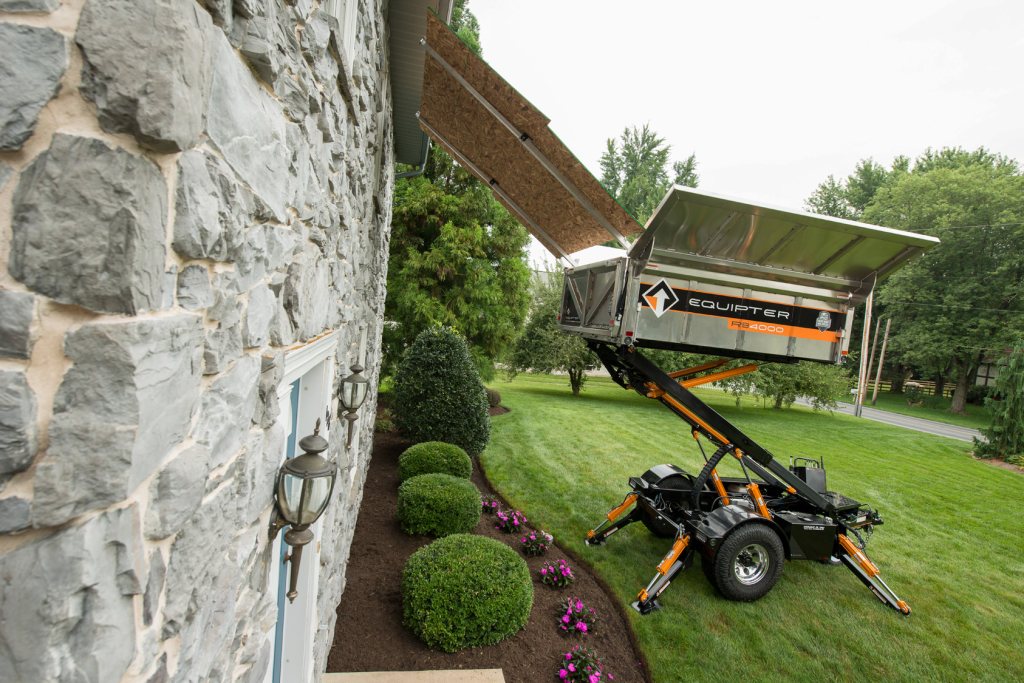
Completed as JMA Exteriors, prior to the RYDGE rebrand.
Roofing questions
What homeowners ask before a roof job.
How do I know if my roof is failing?
From the ground: curling or missing shingles, bare dark patches, and granules in the gutters. Inside: stains on the ceiling, damp insulation, or daylight in the attic. Any one of these is worth an inspection, and none of them automatically means a new roof.
Can a leak be fixed without replacing the roof?
Often, yes. Many leaks start at flashing around a chimney, pipe, or vent while the shingles around it are still sound. We find where the water is getting in before recommending anything bigger.
How long does a replacement take?
Most homes take a day or two. A larger or steeper roof, deck repairs, or rain can add time. You get a schedule before we start and a call if it changes.
Do I need to be home on install day?
No, but stay reachable. If the tear-off uncovers soft decking, we will want your decision before replacing it. Expect noise, so plan for pets and anyone working from home.
What should I do before the crew arrives?
Move cars out of the driveway, take down anything loose on upstairs walls, cover what is stored in the attic, and clear furniture and planters away from the roof edge. We handle the rest of the site protection.
We had ice dams last winter. Is that a roof problem?
Usually it is an attic problem first. Heat escaping into the attic melts snow that refreezes at the eaves. We look at insulation and ventilation along with the roof, because new shingles alone will not stop it.
What if the damage came from a storm?
Start with an inspection either way. If it looks like wind or hail damage and you may have a claim, the Storm Restoration page explains what to do first and how we help with the insurance process.
Start with a conversation
Tell us what is going on with your roof.
A leak, a few missing shingles, or a roof near the end of its life. Tell us what you have noticed and we will follow up to talk through repair or replacement.
Rather talk it through now? 717-368-2102
Keep insurance policy numbers and financial details out of the form.
Request a roof inspection
Two short steps: the project and your ZIP code, then how to reach you. Fields marked required must be filled in.